
The History of Fort San Pedro in Cebu City
Updated:
Fort San Pedro is the oldest surviving Spanish-era structure in Cebu City and one of the oldest in the Philippines. This page walks through what is documented — the 1565 wooden fort, the 18th-century stone fortress, three centuries of colonial service, World War II and the modern restoration — and separates that record from the stories that have grown around the walls.
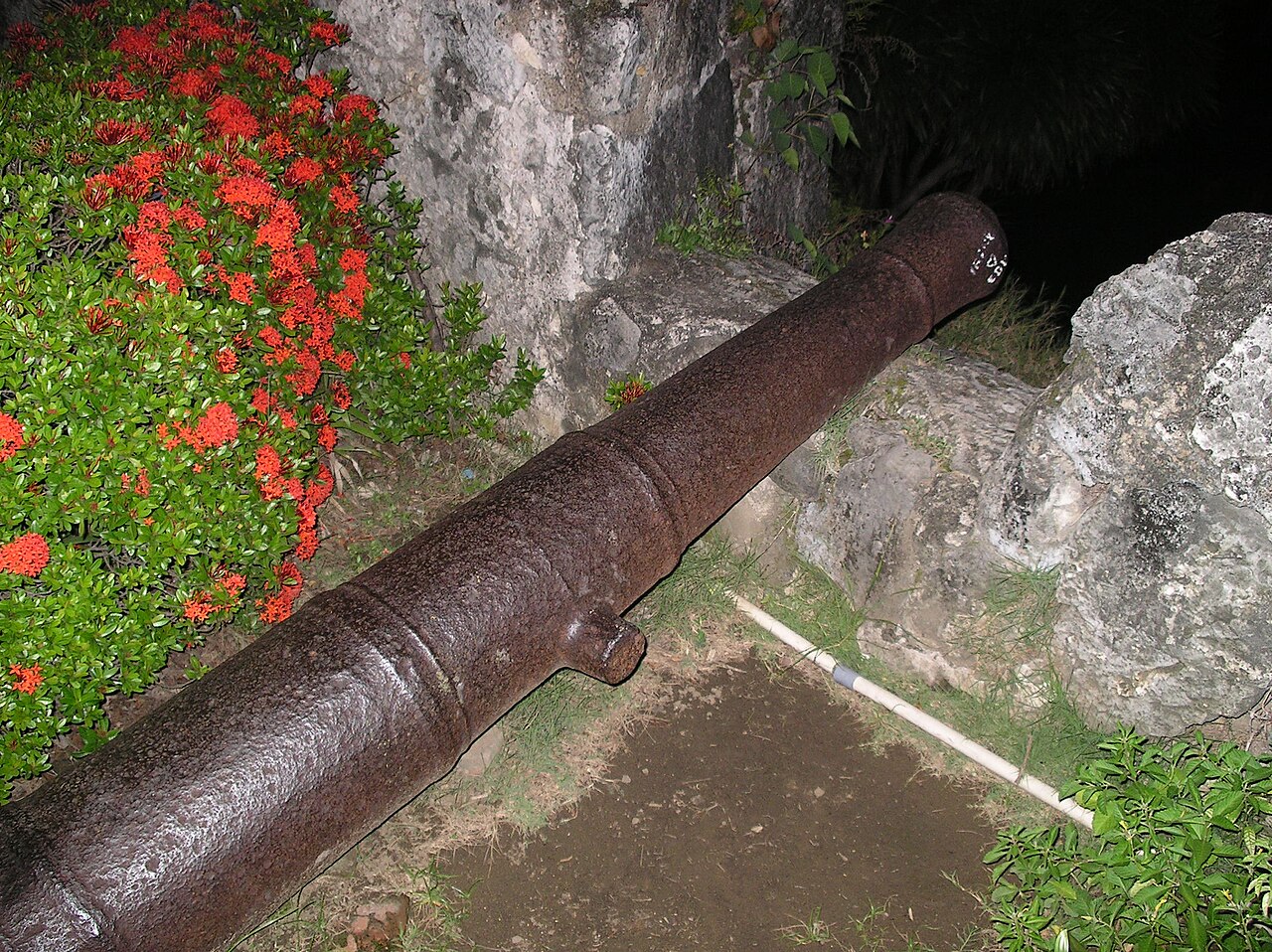
1565: the first fort on this site
When Miguel López de Legazpi’s expedition arrived in Cebu in 1565 and founded the first permanent Spanish settlement in the Philippines, the new colony needed a defensible core. A simple wooden palisade fort was raised on the site that the stone fort occupies today.
That first structure no longer survives, but its position mattered: it guarded the anchorage and the young settlement that would grow into Cebu City, at the edge of what is now Plaza Independencia.
The 18th-century stone fortress
The wooden defenses were eventually replaced by a fortress in coral stone. The present stone fort is generally dated to 1738, making it one of the oldest surviving Spanish colonial military structures in the country.
Its defining feature is the triangular plan, with a bastion at each corner: La Concepción, Ignacio de Loyola and San Miguel. The shape is a textbook example of trace italienne-era defensive design — angled walls that let defenders cover every face of the wall with fire, with no dead corners.
The walls were built from coral stone quarried from nearby waters and set in lime mortar, giving the fort its pale, textured surface. The materials tie the building directly to Cebu’s own coastline.
Spanish garrison to American barracks
For most of the Spanish period the fort served as a garrison, watching over the port district that made Cebu the administrative and commercial hub of the region.
During the Philippine Revolution the fort was taken from its Spanish garrison in 1898, near the end of more than three centuries of colonial rule. When the Americans took over Cebu, the fort was absorbed into the Warwick Barracks complex and continued in military use into the first half of the 20th century.
World War II and the zoo years
The fort saw garrison duty again during the Second World War, as Cebu City was occupied and then fought over. Wartime damage left the structure in poor condition.
After the war, the courtyard was repurposed in a very different way: for a time it housed a small city zoo. Older Cebuano residents still remember that period, and the zoo-era layout explains some of the paths and planting beds visitors see today.
From ruin to landmark: modern restoration
In the decades after the zoo years the fort was progressively restored and opened to the public as a garden courtyard, a small museum with Spanish-era artifacts, paintings and memorabilia, and a viewpoint on the old town.
Today the fort is cared for as a public heritage site rather than a working military one. It is protected under Philippine heritage law alongside structures such as Magellan’s Cross and the Basilica Minore del Santo Niño — a national and local protection, not a UNESCO World Heritage inscription.
Legend versus documented history
Local lore says a secret tunnel once ran from the fort toward the Santo Niño church area. No confirmed passage has ever been found, and historians treat it as folklore rather than fact — but the story endures as one of Cebu’s favorite what-ifs.
Other commonly repeated claims — exact construction crews, hidden treasure, ghost sightings — sit in the same category. This guide sticks to what can be checked: settlement records, the fort’s physical fabric, and the documented sequence of colonial, wartime and civic uses described above.
Sources for this history
Philippines Department of Tourism
beta.tourism.gov.ph — official tourism portal with background on Cebu’s Spanish-era sites.
Cebu City Government
cebucity.gov.ph — municipal information on downtown heritage structures.
National Museum of the Philippines
nationalmuseum.gov.ph — national context on Spanish-colonial era structures and artifacts.
Fort San Pedro Google Maps listing
maps.app.goo.gl/6fjF8nk4AbeGTdsB6 — current visitor information, photos and reviews.
Frequently asked questions.
When was Fort San Pedro built?+
The first wooden fort dates to 1565, when the first permanent Spanish settlement in the Philippines was founded in Cebu. The present stone fortress is generally dated to 1738.
Why is Fort San Pedro triangular?+
The triangular plan with a bastion at each corner is a defensive design: it lets defenders cover every face of the walls with fire and eliminates dead corners. The three bastions are named La Concepción, Ignacio de Loyola and San Miguel.
What material was used to build the fort?+
Coral stone quarried from nearby waters, set in lime mortar. The pale, textured walls still show those materials today.
Was Fort San Pedro used during World War II?+
Yes. It saw garrison duty during the war, and wartime damage left the structure in poor condition. After the war the courtyard briefly housed a small city zoo before the fort was restored as a garden and museum.
Is it true there is a secret tunnel under Fort San Pedro?+
No confirmed tunnel has ever been found. The story is local folklore, not documented history, though it remains one of Cebu’s favorite tales.
Is Fort San Pedro a UNESCO World Heritage Site?+
No. The fort is protected under Philippine heritage law as a nationally and locally significant structure, but it has no UNESCO World Heritage inscription.